



Menu


 Hyeonseon Namgung ㅣ
 Approval 2026-03-11 |
 No.22 ㅣ view : 270


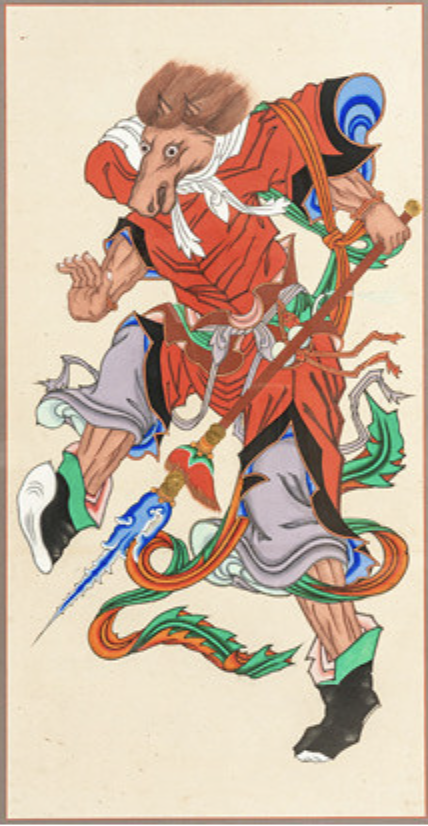
The Tweleve Jodiac Animals ©National Folk Museum of Korea
The year 2026 is the Year of the Red Horse, symbolized by two entities: fire and the horse. Fire represents explosive energy, and the horse represents constant motion. Therefore, the Year of the Red Horse is considered a year of momentum, expansion, and change. In 2026, we can look forward to a year of hopeful leaps and vitality, combining the passion and courage of the color red with the horse’s energy.
The Symbol of the Horse in Korean Culture
In Korean culture, horses have held symbolic meaning that extends far beyond their practical role as animals of labor or transportation. Ancient myths and historical records, such as Samguk Yusa and Samguk Sagi, frequently depict horses as sacred or extraordinary beings. Rather than appearing as ordinary livestock, horses are often portrayed as messengers between worlds or as symbols of will and destiny.
One of the most well-known mythical horses is Chollima, the winged horse said to travel a thousand li in a single day. A li is a traditional East Asian unit of distance equivalent to approximately 0.4 kilometers. Chollima symbolizes supernatural speed, brilliance, and exceptional talent. Even today, this image remains deeply embedded in Korean society, appearing in art and literature as a metaphor for rapid progress and outstanding ability.
Beyond mythology, horses have continuously evolved in their relationship with humans. Once hunted for food, they later became essential partners in agriculture and warfare. Despite these changes, their symbolic power has endured. Horses continue to exist in human life as creatures of dreams and aspirations, representing freedom, strength, and the desire to move toward new possibilities.
What Is New in the Year of the Red Horse
As Korea greets the Year of the Red Horse, it is expected to see significant institutional changes across various sectors, including labor, finance, education, and welfare.
The minimum wage will increase by 2.9% to 10,302 won per hour. Also, starting this year, the transportation program “Everyone’s Card” will be introduced. “Everyone’s Card” offers increased refund benefits to the existing nationwide “K-Pass” program. This system will refund 100% of the excess cost if public transportation usage exceeds the monthly threshold. The standard monthly fee in the Seoul metropolitan area is 62,000 won, but the amount will vary depending on factors such as the number of children and income.
For Change and a Leap Forward
In the Year of the Red Horse, we must set a direction and move forward. The problem is not how fast one is going, but where one is heading. What is needed are the reins. They are the judgment needed to control your pace, determine one’s direction, and distinguish between a moat one must cross or a path one needs to take around it. The SeoulTech sincerely hopes this year will be one in which everyone advances steadily toward their goals.
Reporter
Hyeonseon Namgung
namgung0121@seoultech.ac.kr


 Comment 0
 Posts containing profanity or personal attacks will be deleted
 HOME
HOME



 Korean Bingsu: A Sweet Tradition of Summer
 2026 Hwaetbul-Je
 Inside SeoulTech’s Sunglim Global Kitchen
 2026 Major Fair: Helping Students Choose Their Major
 COEX Exhibition: Media and Mechanical Engineering