



Menu


 Siyeon Oh, Sua Lee ㅣ
 Approval 2026-05-13 |
 No.23 ㅣ view : 309


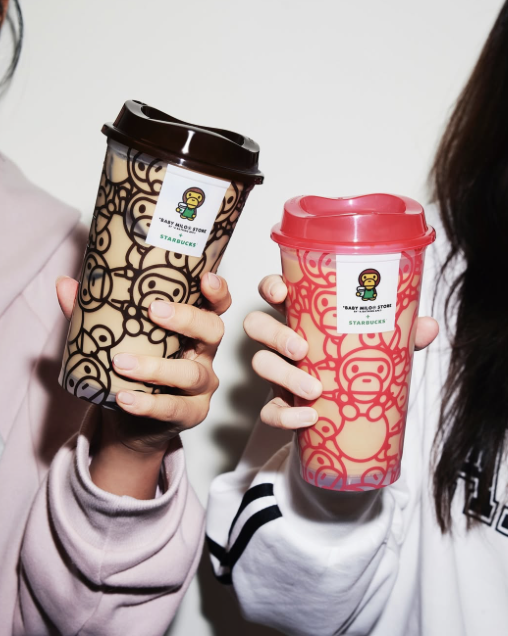
Starbucks X BAPE’s reusable cup © starbuckskorea
In recent years, there has been a growing trend of brands collaborating to launch limited-edition products, attracting significant attention from consumers. A tumbler released through a collaboration between the streetwear brand BAPE and the global coffee brand Starbucks was sold in limited quantities per store, leading to an “open run” phenomenon. The tumbler was later resold at significantly higher prices in online secondhand markets. This type of collaboration, involving brands from completely different industries, is now commonplace. For example, a Galaxy Buds case, developed through a collaboration between Samsung Electronics and Maeil Dairies, has been praised by consumers for creating a fresh and innovative image by combining an electronics brand with a food company. These collaborative products go beyond simply launching new items; they capture customers’ attention and increase engagement. So, are these collaborations simply a passing trend, or are they deliberate strategies by companies?
The Effect of Collaboration Marketing
Collaboration marketing is a strategy in which different brands or companies work together to launch new products, services, or content. Collaborations between two brands create synergy, increase brand awareness, and attract new customers, ultimately enhancing the value of both. One notable example is the SPC Samlip x Pokémon Bread collabora tion, which sparked a simultaneous bread-buying, sticker-collecting craze among Pokémon fans. But what makes these collaborative products so enticing?
Collaboration marketing brings mutual benefits across a range of industries, including consumer brands, character licensing, coffee, furniture, and clothing. For brands, collaborations open doors to target audiences beyond existing customer bases and help refresh their image in new directions. For the character industry, they expand the range of character usage and extend the lifecycle of content. Pokémon Korea, for example, has continuously attracted new consumers by applying its characters across food, fashion, and IT products.
Collaboration as a Cultural Platform
Industry experts also emphasize that collaboration marketing goes beyond short-term hype. It is a process of creating a new story by combining the identities of two brands, and consumers respond to that narrative. Moreover, even unexpected combinations can generate strong buzz and increase brand awareness.
Consumers perceive these collaborative products not merely as goods, but as cultural experiences. The process of purchasing, sharing on social media, and sometimes the collecting or reselling limited items becomes a form of participation. In this sense, collaborative products create a new culture centered on experience and interaction.
Ultimately, collaboration products are not simply the result of combining two brands, but rather a form of integrated content where brand synergy and consumer experience intersect. They function as cultural platforms where consumers actively participate, share, and create meaning.
Collaboration Marketing as a Sustainable Strategy
The recent boom in collaborative products has moved beyond a passing trend and established itself as a key direction in modern marketing. Brands use partnerships to break away from existing images, build new identities, and offer differentiated experiences. Collaborations across industries, in particular, bring a sense of freshness and draw new attention to brands.
Looking ahead, collaboration marketing is expected to grow in more diverse forms. Partnerships among character IPs, tech companies, and lifestyle brands will likely expand beyond product launches into pop-up stores, immersive experiences, and digital platforms. In this context, collaboration will continue not as a temporary trend, but as a sustainable strategy connecting brands and consumers.
Reporters
Siyeon Oh
cinamellow@seoultech.ac.kr
Sua Lee
sualee7@g.seoultech.ac.kr


 Comment 0
 Posts containing profanity or personal attacks will be deleted
 HOME
HOME



 Korean Bingsu: A Sweet Tradition of Summer
 2026 Hwaetbul-Je
 Inside SeoulTech’s Sunglim Global Kitchen
 2026 Major Fair: Helping Students Choose Their Major
 COEX Exhibition: Media and Mechanical Engineering