



Menu


 Hyeonseon Namgung ㅣ
 Approval 2026-05-13 |
 No.23 ㅣ view : 229


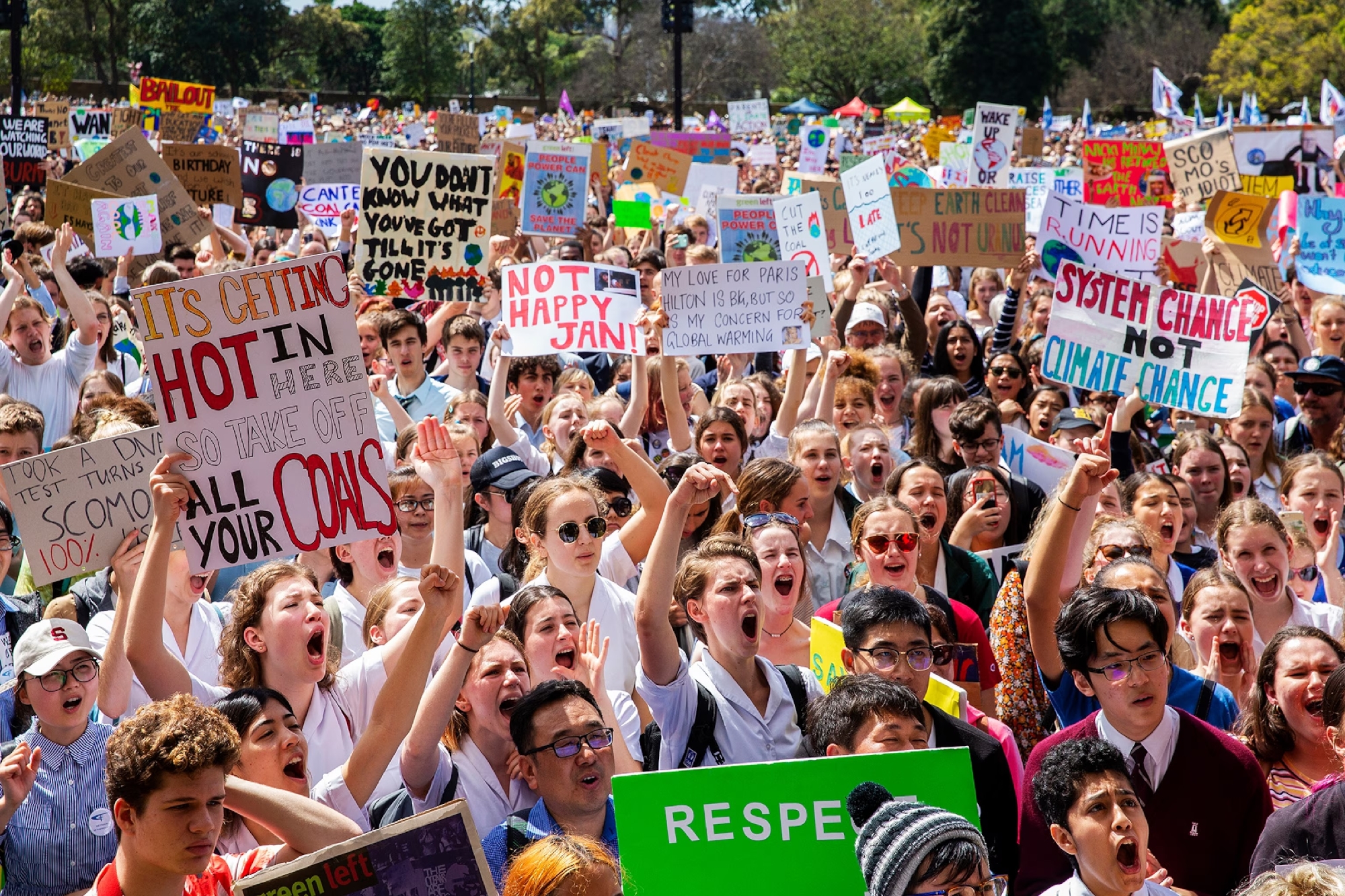
Kids worldwide are on strike for the climate.
Photo © NATIONAL GEOGRAPHIC
Older generations once described millennials as lazy and overly sensitive. Now, many people say something similar about Generation Z, claiming that Gen Z is self-centered, addicted to social media, and uninterested in broader social issues. Based on this perception, young people today only care about trends and online culture rather than the world around them.
But is this perception accurate? In reality, many examples suggest the opposite. Around the world, Gen Z has played an increasingly prominent role in social movements, protests, and civic discussions. From climate activism to human rights, young people are often at the forefront of demanding change. Rather than being apathetic, Gen Z may simply be engaging with society in ways that look different from those of previous generations.
One of the most visible signs of Gen Z’s engagement with social issues is their participation in protests and public movements. In recent years, large demonstrations across many countries have included a significant number of young participants. Whether advocating for climate action, gender equality, or human rights, Gen Z has shown a willingness to speak out publicly.
Social media, often criticized as a distraction, has actually become one of Gen Z’s most powerful tools for engagement. Platforms such as Instagram, TikTok, and X allow young people to quickly share information, spread awareness, and organize collective action. While critics might dismiss online activism as “slacktivism,” these digital spaces frequently serve as entry points for real-world participation. A hashtag can turn into a movement, and an online discussion can lead to thousands gathering in the streets.
Another important factor is that Gen Z grew up during a period of global instability. Many have experienced economic uncertainty, climate anxiety, political polarization, and a global pandemic during their formative years. These experi ences have shaped their worldview. Rather than ignoring social issues, many young people feel personally connected to them. However, the way Gen Z expresses social concern may differ from traditional forms of political participation. Older generations may expect civic engagement to take place through voting, formal organizations, or long-term institutional involvement. Gen Z, on the other hand, tends to favor more decentralized and flexible forms of activism, such as online campaigns, making songs, and sharing personal experiences.
This difference in style can sometimes create misunderstandings. To older observers, posting about social issues online might seem superficial. Yet for many young people, sharing information, raising awareness, and building communities on line are meaningful forms of participation that can help amplify previously marginalized voices.
Of course, not every member of Gen Z is politically active or socially engaged. Like any generation, it includes a wide range of perspectives and levels of interest. Some are deeply involved in social causes, while others focus more on personal goals or everyday life. The same, however, can be said of any generation throughout history.
What may distinguish Gen Z is not indifference, but a different relationship with social issues. They tend to approach problems through global awareness, digital communication, and collective action rather than through traditional political structures. Their activism may appear informal, but that does not make it insignificant.
In fact, if we look closely at today’s protests, advocacy campaigns, and social movements, Gen Z is often impossible to ignore. From organizing climate strikes to supporting human rights movements and participating in demonstrations, young people are frequently among the most visible voices demanding change.
So, rather than asking whether Gen Z cares about society or not, the question should be whether society is willing to recognize and understand the new forms of engagement that Gen Z brings today.


 Comment 0
 Posts containing profanity or personal attacks will be deleted
 HOME
HOME



 Korean Bingsu: A Sweet Tradition of Summer
 2026 Hwaetbul-Je
 Inside SeoulTech’s Sunglim Global Kitchen
 2026 Major Fair: Helping Students Choose Their Major
 COEX Exhibition: Media and Mechanical Engineering