



Menu


 Hyeonseon Namgung ㅣ
 Approval 2026-10-06 |
 No.25 ㅣ view : 5


When a new semester begins, one of the first things that comes to mind is the university festival. Once the lineup is announced on Instagram, however, the conversation often centers almost entirely on the invited artists. There is nothing wrong with being excited about high-profile artists. For many students, seeing a singer perform live and sharing that special moment with friends could be one of the most memorable parts of university life. But if we remember a festival mainly by the artists who appeared on stage, we may be overlooking something more important: the students and community that make the festival possible.
Perhaps it is time to look beyond the lineup and ask what a university festival is actually for. A university festival is more than a series of performances. It is one of the few occasions when students from different departments, years, and clubs can come together in the same space. They prepare programs, perform on stage, or run booths together. Even small encounters, such as a conversation with someone from another department or a shared laugh while waiting at a booth, can become part of the memories that define university life.
For the students who spend weeks or months preparing for the festival, it is also the result of their own work. The festival, therefore, is not simply something for students to passively consume. It is something that students actively create and experience.
This is where the growing focus on celebrity lineups is worth reconsidering. A popular lineup gives students something to look forward to and can create a lively atmosphere across campus.
The problem is not the presence of artists, but the way names become the focal point. The same question can be asked about the growing commercialization of university festivals. Corporate sponsorships, food trucks, and outside visitors can provide additional resources and make festivals more diverse. These elements are not necessarily negative. However, if commercial promotions become more prominent than student-created programs, we have to ask whether the event still reflects the character of a university festival. This does not mean that universities should eliminate famous artists or commercial elements. Rather, they should be considered part of the festival, not the festival itself.
A meaningful university festival should encourage students to do more than watch: it should invite them to participate. They should be able to create booths, organize events, perform on stage, and simply spend time with others. These experiences may not attract as much attention on social media as a celebrity performance, but they can be what gives the festival its unique identity. After all, a performance lasts only a few hours. The memories created around it can last much longer.
A good university festival should therefore be more than a collection of exciting moments. It should strengthen the sense that students are part of a community. It should be a place where they do not simply watch something happen, but become part of making it happen.
So, whose festival is it? It should be ours, not as an audience gathered to watch a celebrity, but as a university community creating something together. In this way, a university festival can be more than a stage for celebrities. It can be a stage created by and for students.
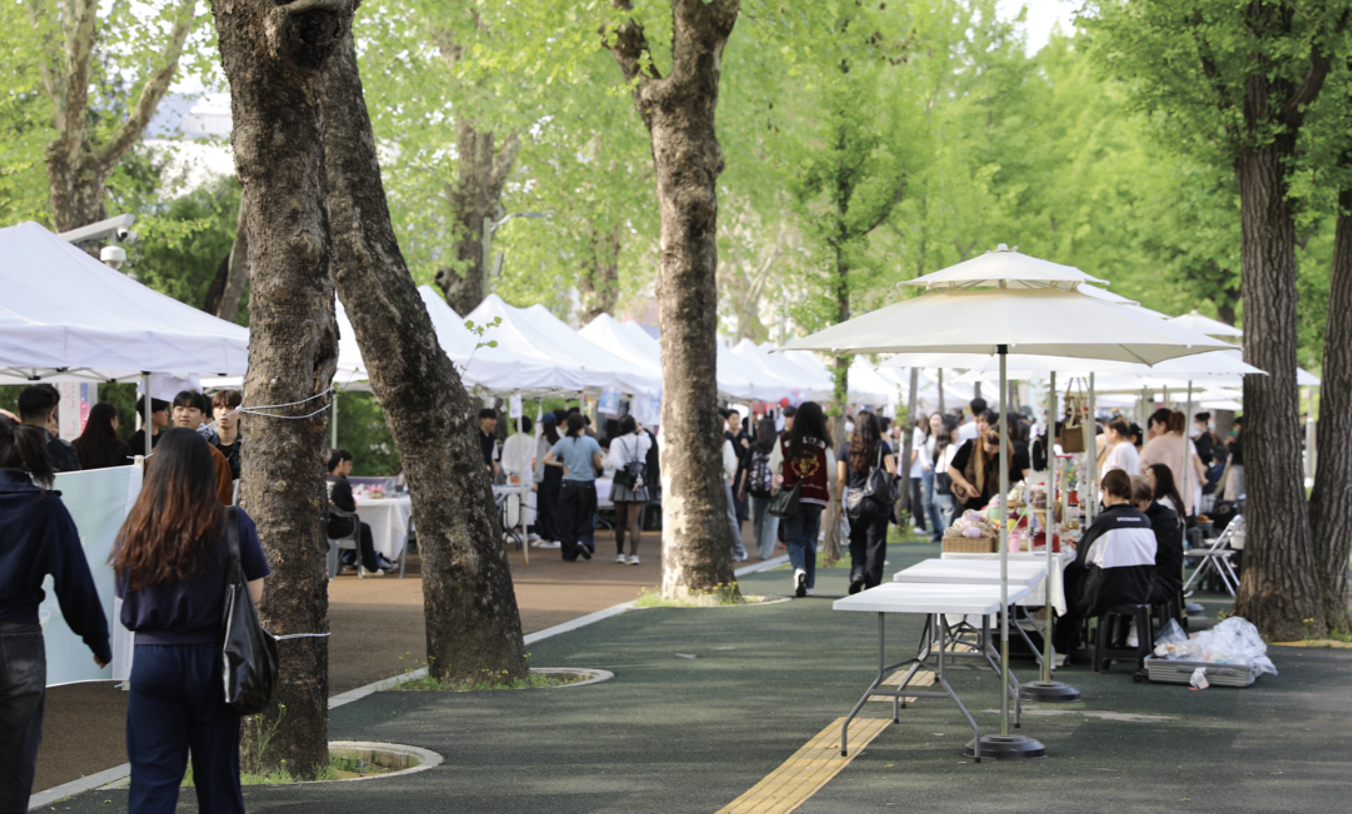 Students Running Booths ©SeoulTech Times
Reporter
Hyeonseon Namgung
namgung0121@seoultech.ac.kr


 Comment 0
 Posts containing profanity or personal attacks will be deleted
 HOME
HOME



 LUPIC: Connection Beyond Study
 From Pen to Page
 Study Korea 300K Project
 In Crisis: Commerce in Gongneung-dong
 Europe’s Summer of Extreme Heat