



Menu


 Jaeho Lim, Sua Lee ㅣ
 Approval 2026-03-10 |
 No.22 ㅣ view : 259


Recently, many students have raised concerns about prolonged seat hogging in SeoulTech’s campus libraries. The issue is particularly noticeable in the Annex Library’s Hullabaloo and reading rooms. This has caused inconvenience for a number of years, despite the issue being raised repeatedly. Combined with the ongoing construction of a new library building and the conversion of the Annex Library’s 1st-floor reading rooms into laboratories in 2024, this chronic seat hogging is exacerbating the shortage of study spaces. To look into this further, The SeoulTech surveyed students and interviewed Jaewon Jang, Academic Information Management Team Leader of the University Libraries Department.
Survey results from 25 students showed that 88% had either witnessed seat hogging or experienced disruption in the libraries. Hullabaloo and the reading rooms of Annex Library were identified as the most severely affected areas.
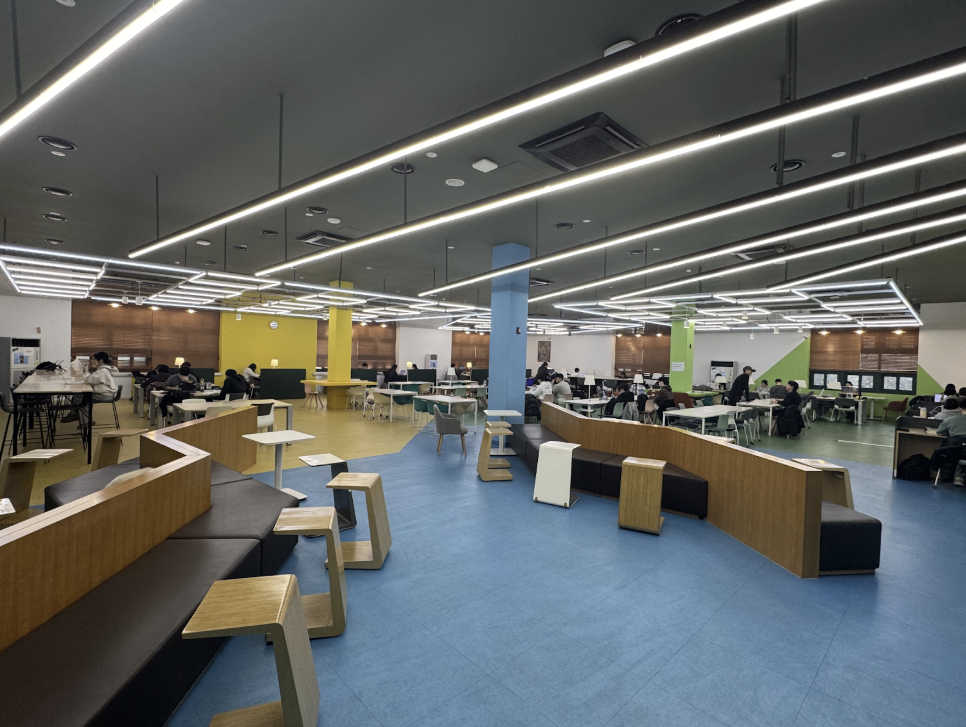 Hullabaloo in the Annex Library
Hullabaloo
Located on the Annex Library’s 2nd floor, Hullabaloo provides students an open study space that operates 24/7, including vacation periods. Unlike the reading rooms, it features flexible access without seat reservations or time limits.
Even though Hullabaloo has the advantage of providing students with a flexible studying environment, these very features often act as administrative loopholes. Since seat reservations are not necessary, competition for seats during exam periods is severe. One student who responded to The SeoulTech’s survey stated, “I often see some students not actually studying at their seats, even though their belongings have been there for a long time.” Regarding these problems, students urged that proper measures be taken, such as administrator inspections and CCTV monitoring. Some students also responded that both an expansion of study spaces on campus and the implementation of a seat reservation system are necessary.
When The SeoulTech relayed these survey findings to Jang, he explained that the open-access nature of the Hullabaloo study space makes it difficult to implement a seat reservation system or take enforcement action. Still, he acknowledged that seat hogging causes inconvenience to other students and stated that the University Libraries Department is actively seeking practical management solutions. He pledged that his team would promote library etiquette through video content and notices.
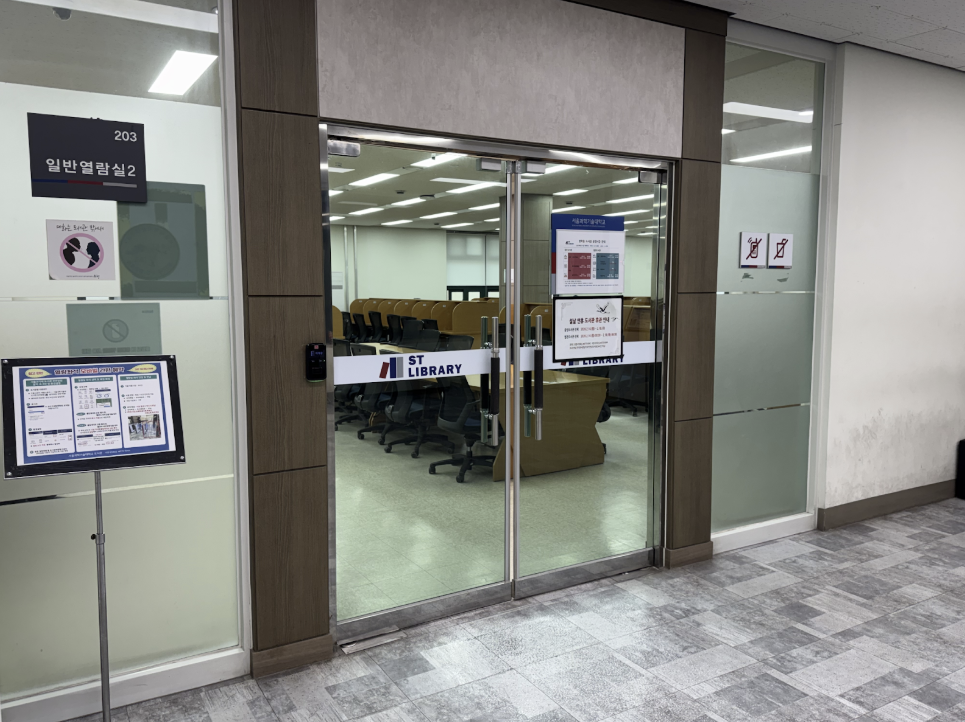 A Reading Room in the Annex Library
Reading rooms
The reading rooms, also located on the 2nd floor of the Annex Library, have received negative feedback for different reasons. The rooms are divided into a laptop-only room and a room for more general use. They operate on a 24-hour basis for the first semester of 2026. Unlike Hullabaloo, students are supposed to book a seat before using the rooms. They can book seats through ST LIBRARY, SeoulTech’s mobile library app, or a seat reservation kiosk. The seat reservation system allows seat booking, extension, and checkout. One booking lasts for three hours. After that, students can extend it for another three hours if they want.
However, some students use seats without booking them first, even though this is against the rules. As with Hullabaloo, this becomes a bigger problem during exam periods, with one survey participant recalling being unable to use the reading rooms because other students were taking up seats that they had not reserved on the system. Another student explained that seats are automatically released after three hours, but some students become so focused on studying that they do not notice their time is over and keep using the same seat. This can give the impression of seat hoarding.
Student dissatisfaction with the existing system is clear, with the survey question “How effective do you think the current SeoulTech library’s seat assignment system is?” eliciting a score of just 2.7 out of 5. To address this, students called for improvements such as automatic time extensions and the use of empty lecture rooms as additional study spaces.
The SeoulTech put these findings to Jang, who pointed out that in the case of reading rooms, unintended seat hogging often occurs because users do not receive notifications before their time expires. Upon checking ST LIBRARY, Jang confirmed that notifications are not delivered if users don’t permit alert on the app. In response, he stated that his department will review corrective measures for this.
Furthermore, Jang revealed that the University Libraries Department is considering an extension of the standard usage period from the current three hours. Regarding the utilization of vacant lecture rooms, he explained that plans were discussed focusing on Eoui Hall and International Hall, but practical constraints make it difficult to implement. Consequently, he concluded that focusing on the successful completion of the new library building remains the most feasible solution at this time.
The SeoulTech has examined the perspectives of both students and the Jang’s team, regarding the issue of seat hogging. Moving forward, there is hope that a combination of effective measures taken by the University Libraries Department and voluntary cooperation from students will foster a much-improved learning environment across SeoulTech’s campus libraries.
Reporters
Jaeho Lim
limjaeho4119@seoultech.ac.kr
Sua Lee
sualee7@g.seoultech.ac.kr


 Comment 0
 Posts containing profanity or personal attacks will be deleted
 HOME
HOME



 2026 Housing Support for University Students
 A Spring Campus Guide for SeoulTech Students
 1,000-Won Breakfast
 Updates on Annex Library Group Study Rooms
 A Closer Look Into a Student’s Life: Hyeokgyu Kwon